Preserved eucalyptus blue gum is a long-lasting botanical foliage derived from Eucalyptus globulus, valued for its rounded green leaves, architectural structure, and versatility in interior design.
Native to Australia, it is widely used in decorative arrangements, green walls, preserved trees, and contemporary spatial styling due to its natural appearance and durability.
Understanding Eucalyptus Blue Gum
Eucalyptus blue gum, botanically known as Eucalyptus globulus, is one of the most recognisable species within the eucalyptus family.
While the eucalyptus genus includes more than 700 species, blue gum stands apart for its distinctive juvenile foliage, rounded leaf shape, and dense visual volume.
These characteristics make it particularly suitable for decorative and architectural applications.
When preserved, eucalyptus blue gum retains its natural flexibility and colour while offering a stable, long-lasting alternative to fresh foliage.
Its structured yet organic appearance allows it to be used across a wide range of interior environments, from private residences to large commercial projects.
Unlike silver-toned eucalyptus varieties, blue gum foliage is naturally green, offering a more grounded, botanical look that integrates easily into both neutral and earthy design palettes.
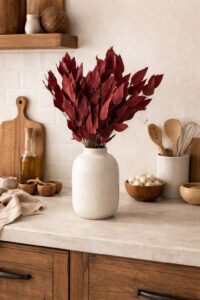
Botanical Origin and Native Regions
Eucalyptus globulus is native to southeastern Australia, particularly :
In its natural habitat, eucalyptus blue gum grows as a tall evergreen tree, thriving in temperate climates with adequate rainfall.
Over time, the species has been introduced to other regions of the world due to its adaptability and economic value, including parts of :
-
Southern Europe
-
East Africa
-
South America
-
The Mediterranean basin
I
Its adaptability has made it one of the most widely cultivated eucalyptus species globally, particularly for forestry, ornamental use, and foliage production.
 Key Visual Characteristics
Several defining features explain why eucalyptus blue gum is highly valued in preserved botanical design:
Rounded Juvenile Leaves
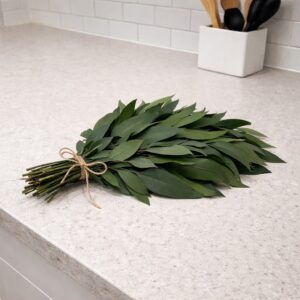
The rounded, coin-like leaves create a soft yet graphic silhouette.
When grouped together, they provide fullness and depth without appearing heavy.
Natural Green Colour
Unlike silvery eucalyptus varieties, blue gum offers a rich green tone that works exceptionally well in modern interiors, hospitality spaces, and corporate environments seeking a natural but restrained aesthetic.
Strong Structural Form
The branching structure allows the foliage to be shaped into arrangements, panels, partitions, and freestanding botanical forms without losing visual balance.
These traits make eucalyptus blue gum suitable for both minimalist compositions and large-scale decorative installations.
Uses of Preserved Eucalyptus Blue Gum in Interior Design
1. Decorative Arrangements and Statement Pieces
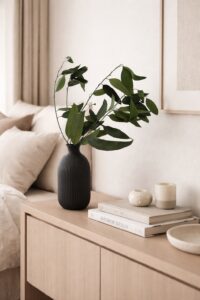
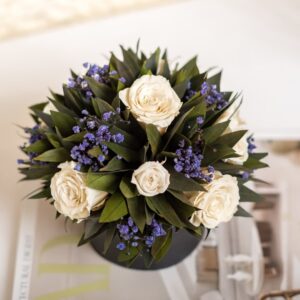
Preserved eucalyptus blue gum is commonly used in vases, floor arrangements, and sculptural botanical compositions.
Its volume allows designers to create impactful displays using relatively few stems, making it ideal for consoles, reception desks, and entrance areas.
Because it maintains its form over time, it is particularly valued in spaces where consistency and longevity are essential.
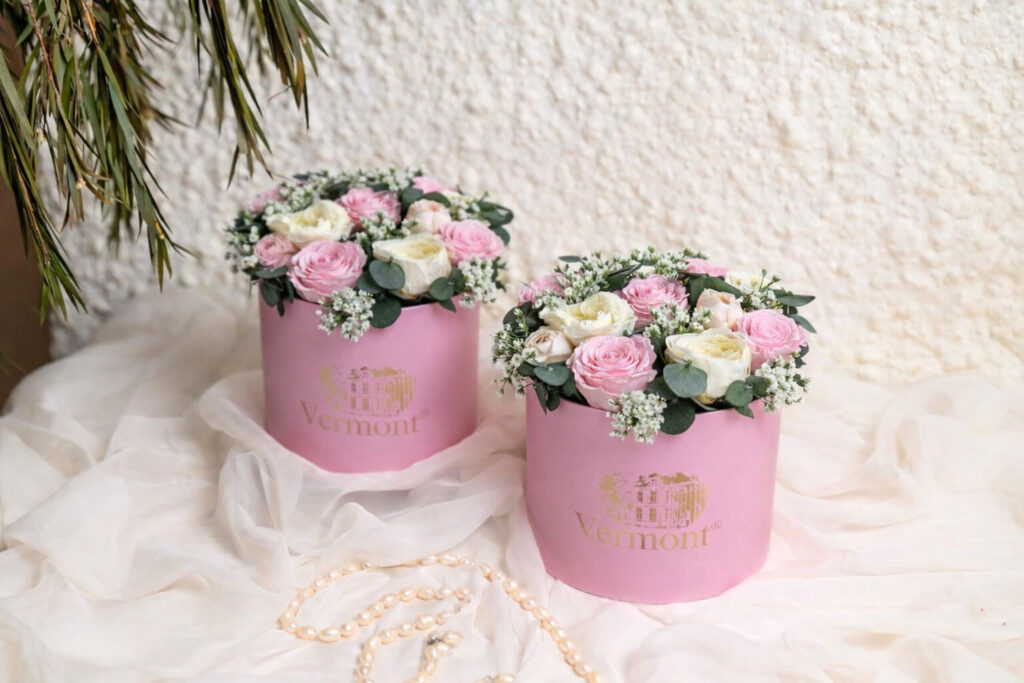
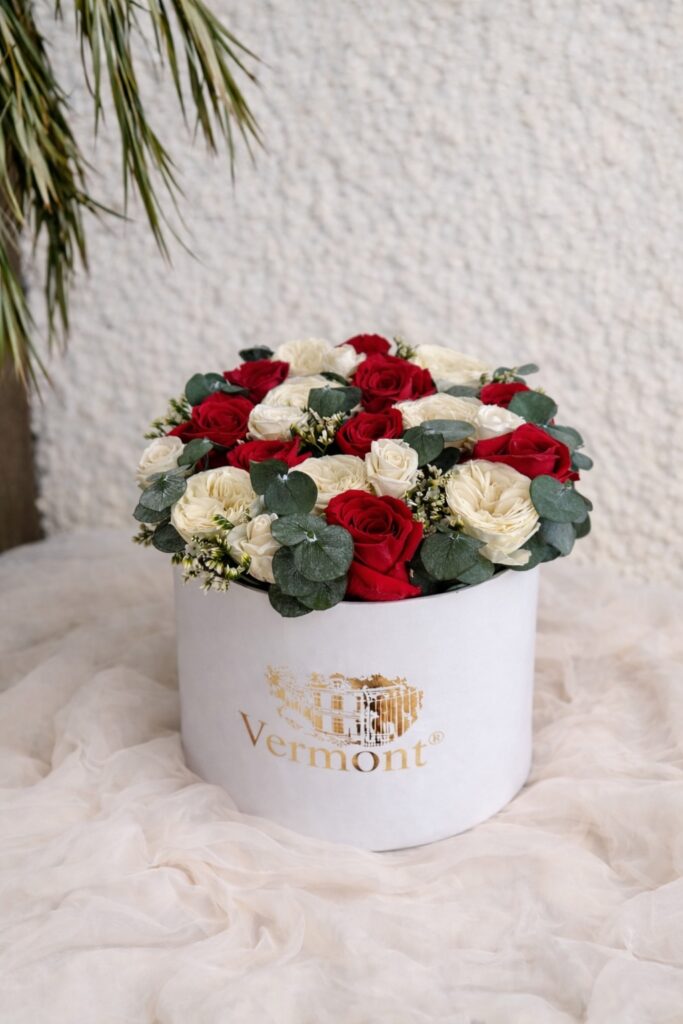
At Vermont Flowers we turn eucalyptus blue gum into posies, which are used in our unique floral designs and bouquets.
2. Preserved Trees and Bonsais
One of the most distinctive applications of preserved eucalyptus blue gum is in the creation of preserved trees and bonsais.
The foliage’s density and flexibility allow it to be shaped into natural canopies, making it an excellent alternative to more commonly used preserved species.
These trees are frequently used in :
-
Hotel lobbies
-
Corporate headquarters
-
Showrooms
-
High-end residential interiors
Their green tone provides a calming, biophilic presence without requiring light, water, or ongoing care.
3. Office Partitions and Spatial Zoning
In modern workspaces, preserved eucalyptus blue gum is increasingly used to create natural partitions.
Integrated into freestanding structures or combined with preserved moss bases, it helps define areas while maintaining visual openness.
This application aligns strongly with contemporary design trends focused on wellness, acoustics, and biophilic principles.
4. Green Walls and Vertical Installations
While moss often forms the base of preserved green walls, eucalyptus blue gum is frequently used as a textural and volumetric element layered into vertical compositions.
Its rounded leaves contrast beautifully with flatter foliage types, adding depth and movement to living wall designs without overwhelming the surface.
5. Hospitality and Commercial Spaces
Hotels, restaurants, and retail environments favour preserved eucalyptus blue gum for its refined appearance and long lifespan.
It performs particularly well in :
-
Reception areas
-
Lounge spaces
-
Dining rooms
-
Corridors and transition zones
Because it remains visually consistent, it supports brand identity and interior styling over extended periods.
 Why Designers Choose Preserved Eucalyptus Blue Gum
Interior designers and architects increasingly specify preserved foliage for projects where durability and aesthetics must coexist.
Eucalyptus blue gum offers several advantages in this context :
-
Consistent appearance over time
-
No reliance on natural light
-
Compatibility with a wide range of materials (wood, stone, metal)
-
Adaptability to both contemporary and classic interiors
Its natural structure allows it to look intentional rather than decorative, which is particularly important in high-end commercial design.
Styling Considerations and Design Pairings
Preserved eucalyptus blue gum pairs well with :
-
Neutral palettes (off-white, beige, taupe)
-
Dark accents (black, charcoal, bronze)
-
Natural textures (linen, wood, stone)
It works equally well as a standalone element or combined with preserved grasses, branches, and mosses for layered compositions.
In larger installations, varying stem heights and densities enhances visual rhythm while preserving a natural look.
Sustainability and Long-Term Value
Preserved botanical elements contribute to sustainable interior practices when used thoughtfully.
Their longevity reduces the need for frequent replacement, transport, and disposal associated with fresh materials.
For long-term projects, this translates into both environmental and economic value, particularly in commercial spaces with high maintenance costs.
Preserved eucalyptus blue gum occupies a unique position in the world of interior greenery.
With its origins in Australia, naturally green foliage, and strong architectural presence, it offers designers a versatile botanical material suited to a wide range of applications.
From preserved trees and bonsais to green walls and office partitions, eucalyptus blue gum brings structure, calm, and longevity to interior environments.
Its ability to integrate seamlessly into modern design makes it a preferred choice for projects where aesthetics, durability, and natural presence must align.