Preserved pittosporum has become a highly sought-after foliage in interior design, floral installations, and architectural greenery.
It is valued for its dense foliage, rounded leaves, and elegant natural movement, and offers a refined alternative to traditional preserved greenery such as eucalyptus or boxwood.
Its versatility, durability, and evergreen appearance make it especially popular in luxury décor, green walls, preserved trees, and long-lasting floral arrangements.
In this article, we explore the botanical origin of pittosporum, its native regions, its historical and cultural significance, and the many ways this foliage is used today in interior and commercial design.
 What is Pittosporum? A botanical overview
Pittosporum is a genus of flowering plants belonging to the Pittosporaceae family.
The genus includes over 200 species of evergreen shrubs and small trees, many of which are prized for their ornamental foliage rather than their flowers.
The name comes from the Greek words pitta (pitch or resin) and sporos (seed), referring to the sticky resin that coats the seeds of the plant.
These species are particularly valued for their rounded to oval leaves, leathery texture, and lush, compact growth habit. These qualities translate exceptionally well into preserved foliage applications.
Origin and Native Countries
Pittosporum is native primarily to the Asia-Pacific region, with a natural distribution across :
-
Japan
-
China
-
Korea
-
Australia
-
New Zealand
-
Pacific Islands
-
Parts of Southern Africa
Each region has contributed different species and leaf forms, influencing how pittosporum is used in landscaping, floristry, and interior décor around the world.
Asia
In Japan and East Asia, Pittosporum tobira has long been cultivated for ornamental gardens and temple landscapes.
Its naturally dense structure and evergreen foliage symbolise stability and longevity, making it a popular plant in formal garden design.
Australia and New Zealand
Pittosporum tenuifolium, native to New Zealand, is one of the most commercially recognised species.
Known for its fine branching and softly undulating leaves, it has become a favourite in both fresh and preserved foliage markets due to its elegant silhouette and adaptability.
The Mediterranean World
Although not originally native to the Mediterranean, pittosporum was introduced centuries ago and quickly became popular in coastal and urban landscaping due to its tolerance to wind and salt air.
Today, its aesthetic is strongly associated with Mediterranean elegance, which explains its popularity in preserved décor for hotels, villas, and luxury residences.
 Key Characteristics
The success of preserved pittosporum in design applications lies in its natural botanical characteristics :
1. Dense, Structured Growth
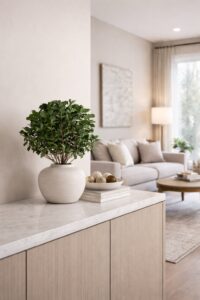
Pittosporum naturally forms compact foliage masses, making it ideal for :
-
Preserved green walls
-
Structured floral installations
-
Preserved trees and bonsais
2. Rounded, Leathery Leaves
The leaves are :
-
Smooth and slightly glossy
-
Oval to rounded in shape
-
Visually soft yet architecturally strong
These traits allow the plant to maintain a natural, fresh appearance over time.
3. Elegant Movement and Depth
Unlike rigid foliage, pittosporum branches offer gentle movement and layered depth, creating organic visual interest in preserved arrangements and vertical gardens.
Uses in Interior and Commercial Design
Preserved pittosporum is exceptionally versatile and integrates seamlessly into both contemporary and classic design concepts.
Green Walls
One of the most common uses of preserved pittosporum foliage is in stabilised green walls and vertical garden panels.
Its dense leaf structure provides excellent coverage, while its rounded leaves soften architectural lines.
It is often used :
-
As a base foliage in preserved green walls
-
Combined with preserved moss, ferns, asparagus, eucalyptus or flowering elements
-
In office spaces, hotels, retail environments, and residential interiors
Floral Arrangements
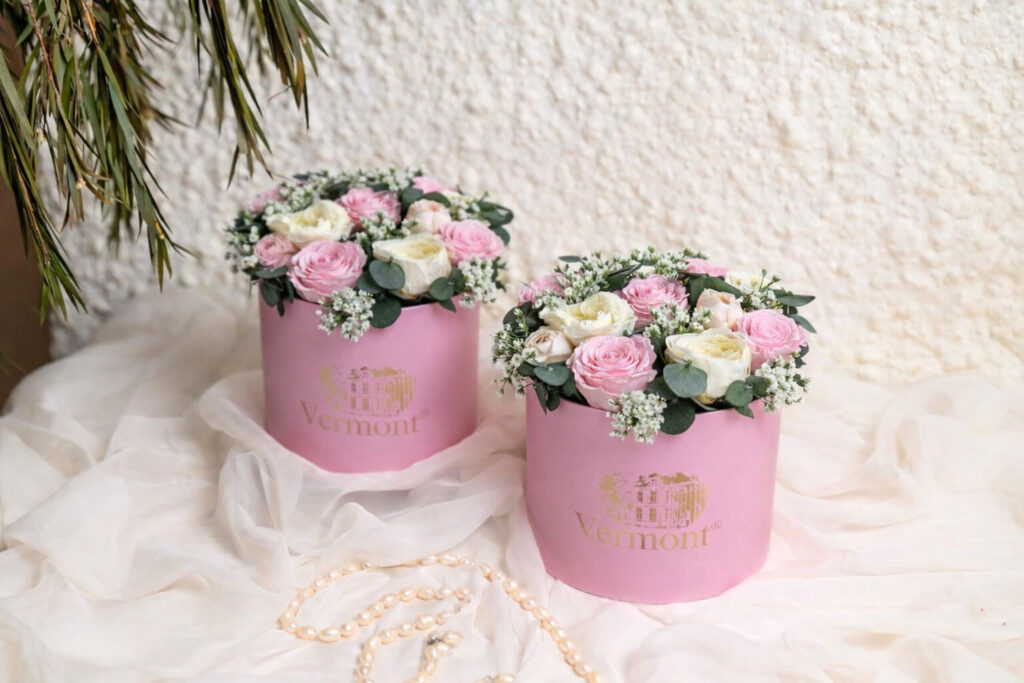
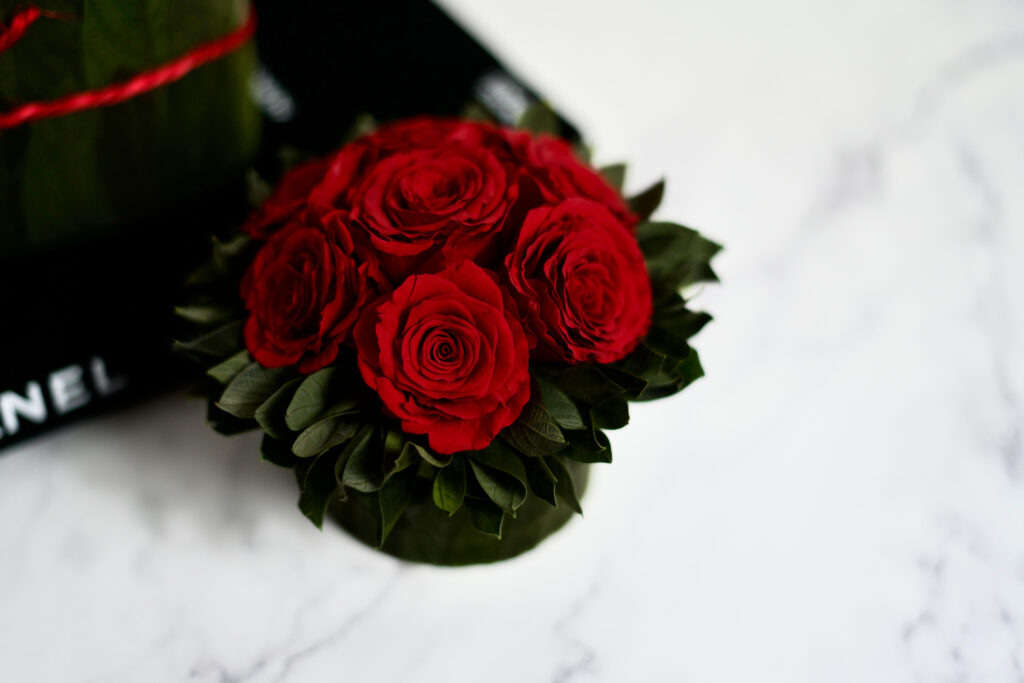
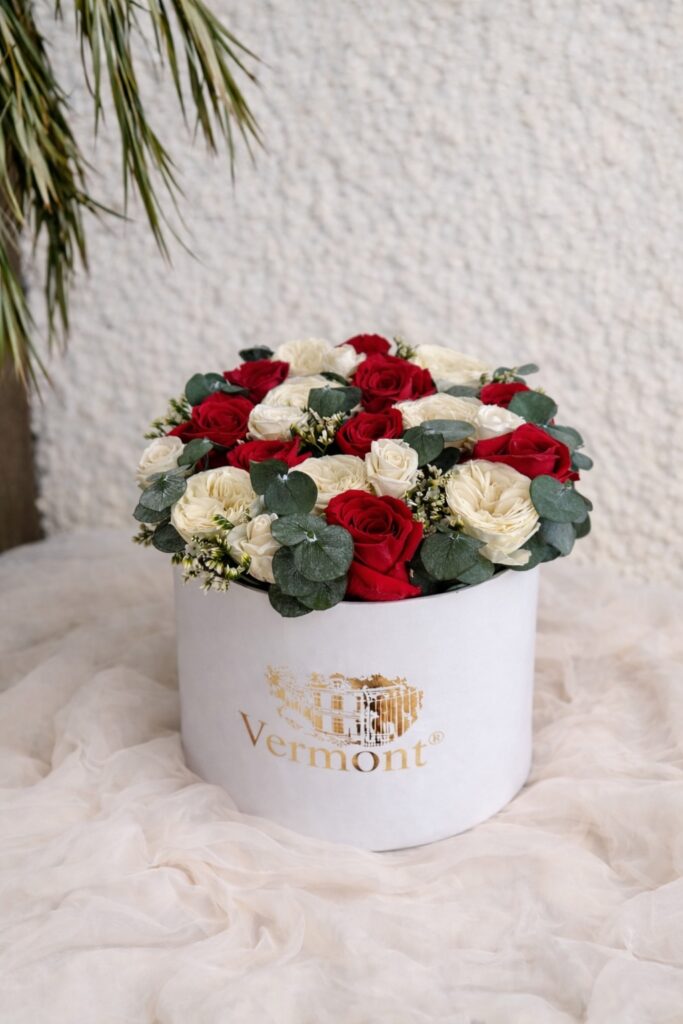
In preserved floral design, pittosporum acts as a structural foliage, supporting preserved flowers such as hydrangeas, roses, or dahlias.
Common applications include :
-
Long-lasting floral centre pieces
-
Event décor and installations
-
Luxury gift arrangements
Its neutral green tone complements both muted and vibrant colour palettes.
Trees and Bonsais
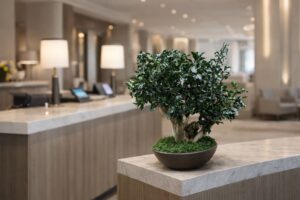
Thanks to its branching habit and leaf density, preserved pittosporum is well suited for :
-
Preserved indoor trees
-
Decorative bonsais
-
Architectural partitions and space dividers
In commercial interiors, preserved pittosporum trees provide a sense of greenery without ongoing maintenance, making them ideal for offices, lobbies, and hospitality spaces.
 Why Designers Choose Preserved Pittosporum
Interior designers, architects, and floral stylists increasingly prefer preserved pittosporum for several reasons :
-
Evergreen appearance year-round
-
Minimal visual ageing over time
-
Consistent colour and texture
-
Adaptability to modern, biophilic, and Mediterranean-inspired interiors
Its understated elegance allows it to blend harmoniously into a wide range of design aesthetics, from minimalist offices to lush botanical installations.
Contemporary Biophilic Design
Biophilic design focuses on reconnecting people with nature within built environments.
Preserved pittosporum plays a significant role in this approach by offering natural texture, depth, and greenery without the constraints of live plant maintenance.
It is particularly effective in :
-
Low-light interiors
-
Climate-controlled commercial spaces
-
High-traffic public environments
By incorporating this lush plant into green walls, feature panels, and decorative installations, designers achieve a natural look with long-term visual stability.
Sustainable Design Choice
Although this article does not cover the preservation process itself, it is worth noting that preserved pittosporum aligns with sustainable interior design principles.
Its long lifespan and low replacement frequency reduce waste and ongoing resource consumption compared to fresh-cut greenery.
This makes this foliage an increasingly popular option for environmentally conscious projects where durability and aesthetics must coexist.
A Timeless Foliage for Lasting Green Design
Preserved pittosporum stands out as a refined, adaptable, and visually rich foliage that bridges the gap between nature and architecture.
Rooted in a diverse botanical heritage spanning Asia, Australia, and the Pacific, this beautiful plant has evolved into a cornerstone of modern preserved greenery design.
It can be used in preserved green walls, floral arrangements, indoor trees, bonsais or architectural installations, where it delivers elegance, depth, and natural beauty for designers, florists, and architects who seek long-lasting green solutions.