Preserved limonium has become popular in modern floral design, interior decoration, and long-lasting botanical installations.
Appreciated for its delicate texture, airy structure, and exceptional versatility, limonium brings lightness and natural elegance to preserved flower arrangements without overpowering other elements.
Often referred to as statice, limonium is valued for its aesthetic qualities and also for its rich botanical history and global origin.
In this article, we explore the origin of limonium, its native regions, botanical characteristics, and its many decorative uses, which make it a very interesting element for designers, florists, and interior stylists who are looking for durable and refined natural décor.
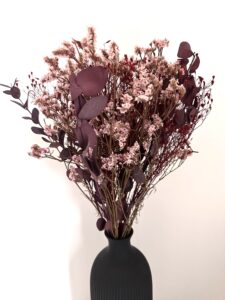 What is Limonium?
Limonium is a genus of flowering plants belonging to the Plumbaginaceae family.
The genus includes more than 300 species, ranging from annual herbs to perennial plants and small shrubs.
Limonium is best known for its fine branching stems and clusters of papery, cloud-like flowers, which retain their shape and texture remarkably well.
Botanically, limonium is characterised by :
-
Thin, wiry stems
-
Small, star-shaped flowers arranged in branching sprays
-
A naturally dry texture even when fresh
-
Long-lasting structural integrity
These qualities explain why limonium has been used for decades in both fresh and dried floral compositions, and why preserved limonium has become increasingly popular in contemporary floral applications.
Origin and Native Regions of Limonium
Limonium is native primarily to coastal and semi-arid regions across the world.
Many species naturally thrive in saline soils, rocky cliffs, and coastal plains, which has contributed to their resilience and adaptability.
Native regions include:
-
The Mediterranean Basin, particularly Spain, Italy, Greece, and North Africa
-
Central and Western Asia
-
Southern Europe
-
Parts of South America
-
Coastal regions of Africa
Spain, in particular, has played a major role in the commercial cultivation and development of limonium varieties.
The Mediterranean climate is characterised by dry summers, mild winters, and high light exposure, which is ideal for limonium growth, contributing to strong stems and well-defined flower clusters.
Kenya has these same climate characteristics, thus making it an ideal place to grow limonium.
Because of its ability to grow in harsh conditions, limonium has historically symbolised endurance, remembrance, and lasting beauty, values that align perfectly with preserved floral design.
Common Limonium Varieties used in Preserved Florals
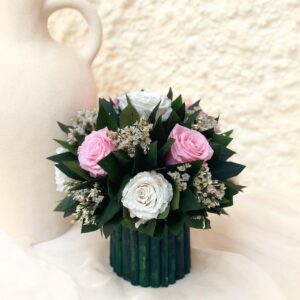
Several limonium species and hybrids are especially valued in preserved flower arrangements due to their structure and visual softness.
Popular types include :
-
Limonium sinuatum : Known for its branching form and vibrant colour range
-
Limonium latifolium : Often used for its airy, cloud-like appearance
-
Limonium perezii : Recognized for broader flower heads and stronger stems
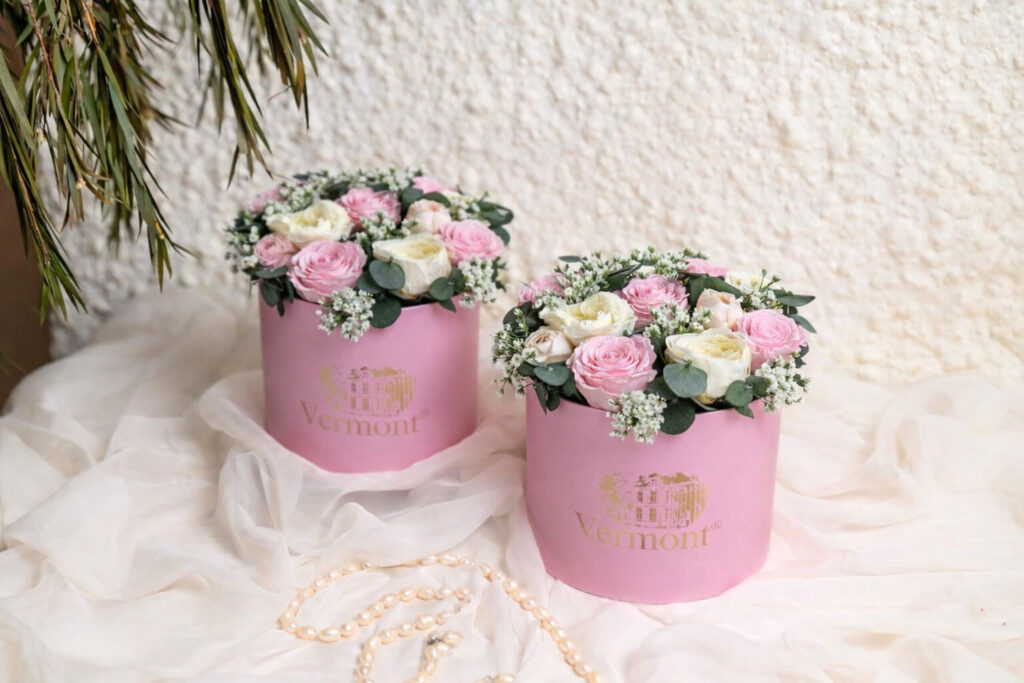
In preserved form, limonium is available in a wide palette of colours, from soft neutrals to rich accent tones, making it suitable for both minimalist and expressive designs.
We offer a variety of colours, going from natural white, to pink, orange, yellow, red, turquoise, purple, blue and brown tones amongst others.
 Why Preserved Limonium is so popular in Floral Design
Preserved limonium stands out as a structural filler flower, offering volume without heaviness.
Unlike focal flowers, limonium enhances arrangements subtly, adding movement, depth, and texture.
Key aesthetic advantages include :
-
Lightweight, airy appearance
-
Natural matte finish
-
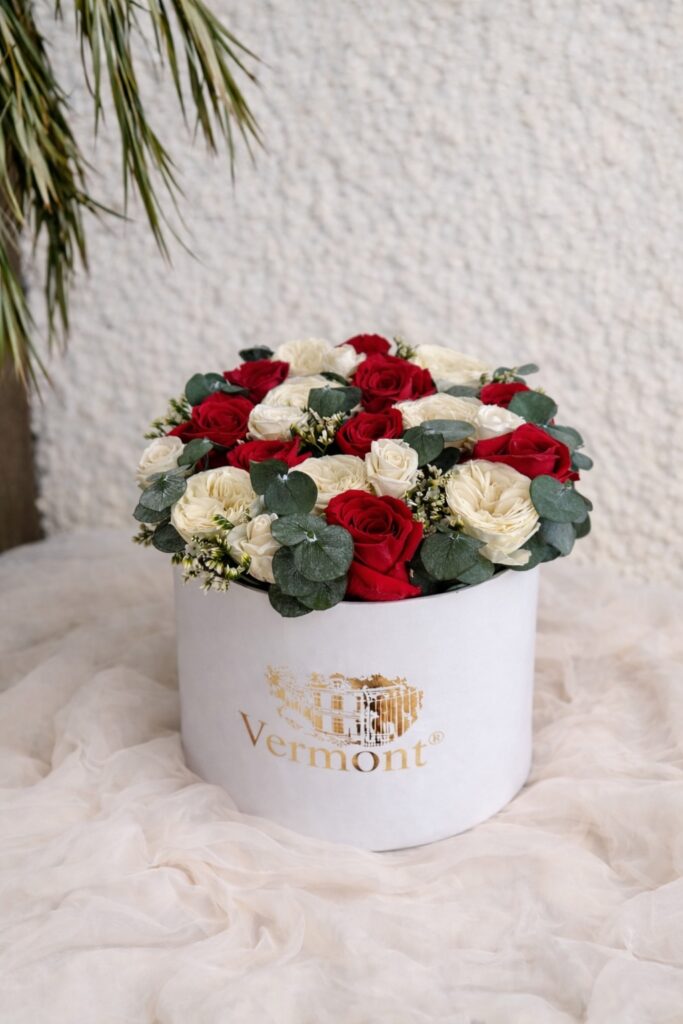
Excellent compatibility with preserved roses, hydrangeas, eucalyptus, and other preserved and dried fillers and foliage
-
Ability to soften structured or architectural designs
Because preserved limonium maintains its shape and colour over time, it is widely used in long-lasting floral décor, where consistency and durability are essential.
Uses of Preserved Limonium in Interior and Event Design
Preserved limonium is extremely versatile and can be used across a wide range of applications, from small decorative accents to large-scale installations.
Floral Arrangements and Bouquets
Preserved limonium is frequently used as a filler in :
-
Preserved flower bouquets : we have a variety of colours that match various colour palettes
-
Table centre pieces
-
Floral boxes and posies
-
Decorative wreaths
Its fine structure creates visual balance, allowing focal flowers to stand out while maintaining a natural, organic feel.
Interior Décor and Styling
Interior designers increasingly choose preserved limonium for :
-
Shelf styling and home décor accents
-
Office reception areas
-
Hotel and hospitality spaces
-
Long-lasting decorative installations
Its understated elegance works particularly well in neutral, contemporary, and biophilic interiors.
Green Walls and Botanical Installations
Preserved limonium is also incorporated into :
-
Preserved green walls
-
Vertical gardens
-
Botanical panels
Used sparingly, it adds texture and contrast to mosses and preserved foliage, preventing flat or monotonous surfaces.
 Symbolism and Cultural Significance of Limonium
Historically, limonium has been associated with :
-
Remembrance
-
Enduring beauty
-
Lasting bonds
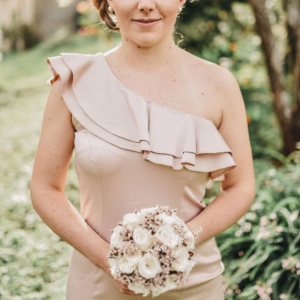
This symbolism has made limonium a popular choice in commemorative arrangements, long-lasting gifts, and decorative pieces intended to convey permanence and emotional value.
In preserved floral design, these meanings are further reinforced, as preserved limonium continues to look beautiful long after fresh flowers would have faded.
Preserved Limonium in Sustainable Floral Design
As sustainability becomes a priority in floral and interior design, preserved limonium plays a key role in reducing waste and maintenance requirements.
Its durability makes it ideal for projects where repeated replacement of fresh flowers is impractical.
Preserved limonium supports :
-
Long-term decorative solutions
-
Reduced logistical demands
-
Consistent visual quality over time
For designers and businesses seeking reliable botanical elements, preserved limonium offers both aesthetic and practical advantages.
A Timeless Botanical Essential
With its origins rooted in resilient coastal landscapes, its delicate yet structured form, and its adaptability across design styles, limonium has earned its place as an essential element in preserved floral design.
It can be used in bouquets, interior décor, green walls, or large-scale installations, where it delivers texture, balance, and elegance.
Its natural beauty, combined with long-lasting performance, makes it a trusted choice for florists, designers, and architects who seek enduring botanical solutions.
As the demand for preserved flowers continues to grow, preserved limonium remains a cornerstone.
It is subtle, refined, and endlessly versatile.